Welcome to Our Research Archive
Search and filter by content type, issue area, author, and keyword
- ✕ Clear Filter
- Artificial Intelligence (6)
- Child Welfare (50)
- Child Welffare (2)
- Civil Society (38)
- divorce (1)
- Economic Opportunity (1)
- Economic Security (110)
- Economic Well-Being (4)
- Education (210)
- Family (117)
- Featured (6)
- Fmaily (1)
- Fraud (2)
- Housing (114)
- Housing Supply (1)
- Immigration (2)
- Labor Market (2)
- Marriage (5)
- New York (1)
- Safety Net (228)
- Social Capital (44)
- Social Captial (1)
- Society and Culture (1)
- Tax & Transfer Policies (1)
- tax credit (2)
- Technology and Innovation (1)
- Temporary Assistance for Needy Families (TANF) (1)
- Welfare (3)
- Workforce (120)
- Workforce Development (4)
- Workfrce (1)
- Workfroce (1)
- Workorce (1)
- ✕ Clear Filter
- Angela Rachidi (56)
- Beth Akers (1)
- Brent Orrell (4)
- Bruce D. Meyer (11)
- Howard Husock (5)
- James C. Capretta (1)
- James Pethokoukis (3)
- Kevin Corinth (47)
- Kyle Pomerleau (6)
- Leslie Ford (6)
- Matt Weidinger (77)
- Michael R. Strain (3)
- Nicholas Eberstadt (1)
- Paul Ryan (1)
- R. Glenn Hubbard (1)
- Richard Burkhauser (8)
- Richard V. Burkhauser (2)
- Robert Cherry (2)
- Robert Doar (8)
- Ryan Streeter (1)
- Scott Winship (26)
- Stan Veuger (3)
- Timothy P. Carney (2)
- W. Bradford Wilcox (3)
- Yuval Levin (3)
August 11, 2025
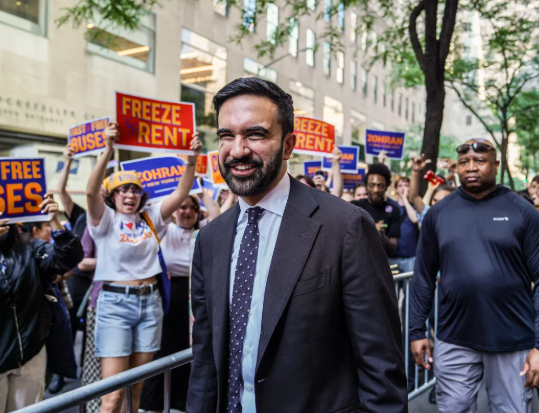
Privileged Zohran Mamdani’s Sweet Rent Deal Exposes the Brutal Truth About NYC’s Housing Crisis
Andrew Cuomo’s revelation that his mayoral rival Zohran Mamdani lives in a $2,300-a-month rent-stabilized apartment in Queens may surprise those who labor under the illusion that low-rent apartments are meant to help those of low income. But there’s nothing about New York City’s system of 960,000 rent-regulated homes to ensure that’s the case — witness its benefits…

August 8, 2025
The One Big Beautiful Bill Includes Conservative Welfare Reforms Worth Expanding
Republicans have plenty to tout in their One Big Beautiful Bill (OBBB), including its extension of the 2017 Trump tax cuts, improved border security, and strengthened national defense. . .But the new law also is noteworthy for leaning on key welfare reforms with a proven track record of success. Those policies—namely, applying work requirements and creating a financial…

August 8, 2025
A win for Wisconsin families: Childcare in the 2025-2027 biennial state budget
Wisconsin’s 2025-2027 biennial budget includes several provisions aimed at improving the affordability of childcare in the Badger state, ending the misguided effort to directly support private childcare providers’ operating expenses with taxpayer dollars — and instead focusing on reducing costs for families through regulatory reform and targeted assistance. It’s a win for Wisconsin families. The…

August 7, 2025
Perspective on the OBBBA’s SNAP Cuts
The Congressional Budget Office (CBO) estimated that the One Big Beautiful Bill Act (OBBBA) will reduce federal spending for the Supplemental Nutrition Assistance Program (SNAP) by $186.7 billion over the next 10 years. While these reductions are substantial, they require important context.

July 17, 2025
Even after the One Big Beautiful Bill, Loopholes Allow Illegal Alien Adults to Receive Welfare and Other Benefits
One major set of policies Republicans touted in their One Big Beautiful Bill (now officially Public Law 119-21, signed on July 4, 2025) sought to end government benefit payments to illegal aliens. But while the new law advances that agenda, such as by preventing illegal alien parents from receiving federal Child Tax Credit (CTC) payments,…

July 1, 2025
More Information Sharing Means Fewer Taxpayer Losses to Fraud
Last month, Rep. Lloyd Doggett (D-TX) introduced a resolution of inquiry objecting to the Trump administration’s development of a “centralized database” that “compiles American citizens’ personal information across federal agencies and departments.” The resolution states that personal information includes “confidential taxpayer, identity, wage, child support, bank account, student loan, health, medical, financial, or other information.” Left unsaid…

June 17, 2025
Work Requirements For Medicaid Could Increase Income and Reduce Poverty
New Congressional Budget Office figures last week indicate that the reconciliation bill passed by the House and under review in the Senate would reduce annual income among the poorest households by $1,600. The next day, the Urban Institute its own analyses, finding that the bill would throw an additional 1.4 million people into poverty. Much of the…

June 10, 2025
The Surprising Epilogue to an Infamous Conn Job
In government scandals, some surnames are especially memorable, even decades later. A fugitive financier named Marc Rich (and his partner Pinky Green) were famously pardoned by Bill Clinton in what “reeked of payoff” for contributions to the Clinton Library. Then there’s former Rep. Pat Swindall (R-GA), who was indicted for perjury. The puns write themselves. But nothing…

May 29, 2025
How Non-disabled Medicaid Recipients Without Children Spend Their Time
The reconciliation bill passed by the United States House of Representatives imposes community engagement requirements for childless non-disabled Medicaid recipients age 19–64, starting in 2027. The requirement can be met by spending 80 hours in at least some months either working, going to school, participating in a work program, or doing community service. In a…

May 28, 2025
An Evaluation of Approaches to Cut and Reform SNAP
House Republicans narrowly passed their version of President Trump’s “big, beautiful bill” last week, and the legislation contains major changes to SNAP, including expanded work requirements, reduced federal and state exemptions and shifting more of the costs to states. Changes are likely as the Senate takes up the bill, and Kevin Corinth, senior fellow and deputy…