Welcome to Our Research Archive
Search and filter by content type, issue area, author, and keyword
- ✕ Clear Filter
- Angela Rachidi (5)
- Beth Akers (1)
- Brent Orrell (1)
- Bruce D. Meyer (2)
- Edward J. Pinto (1)
- Edward L. Glaeser (1)
- James Pethokoukis (3)
- Kevin Corinth (21)
- Matt Weidinger (7)
- Michael R. Strain (1)
- Richard Burkhauser (4)
- Robert Doar (1)
- Scott Winship (10)
- Stan Veuger (1)
- Timothy P. Carney (1)
- Tobias Peter (1)
- W. Bradford Wilcox (1)
- Yuval Levin (1)

June 25, 2025
De-Skilling the Knowledge Economy
Key Points Despite the importance of mid-level workers to sectors like finance, business services, government, and health care, many of these workers are vulnerable to de-skilling, job loss, and forced…

June 4, 2025
Congress Is Subsidizing the Wrong Neighborhoods
When President Trump signed Republicans’ 2017 tax legislation into law, one section in it stood out for its ambitious goal: directing private investment dollars to left-behind communities. The law provides a tax…

May 29, 2025
How Non-disabled Medicaid Recipients Without Children Spend Their Time
The reconciliation bill passed by the United States House of Representatives imposes community engagement requirements for childless non-disabled Medicaid recipients age 19–64, starting in 2027. The requirement can be met…

May 28, 2025
An Evaluation of Approaches to Cut and Reform SNAP
…and shifting more of the costs to states. Changes are likely as the Senate takes up the bill, and Kevin Corinth, senior fellow and deputy director of the Center on…

May 20, 2025
The share of Medicaid recipients in compliance with the House bill’s community engagement requirement
Last week, the House Committee on Energy and Commerce approved several changes to Medicaid as part of the reconciliation bill. One major change is the imposition of community engagement requirements…
May 14, 2025
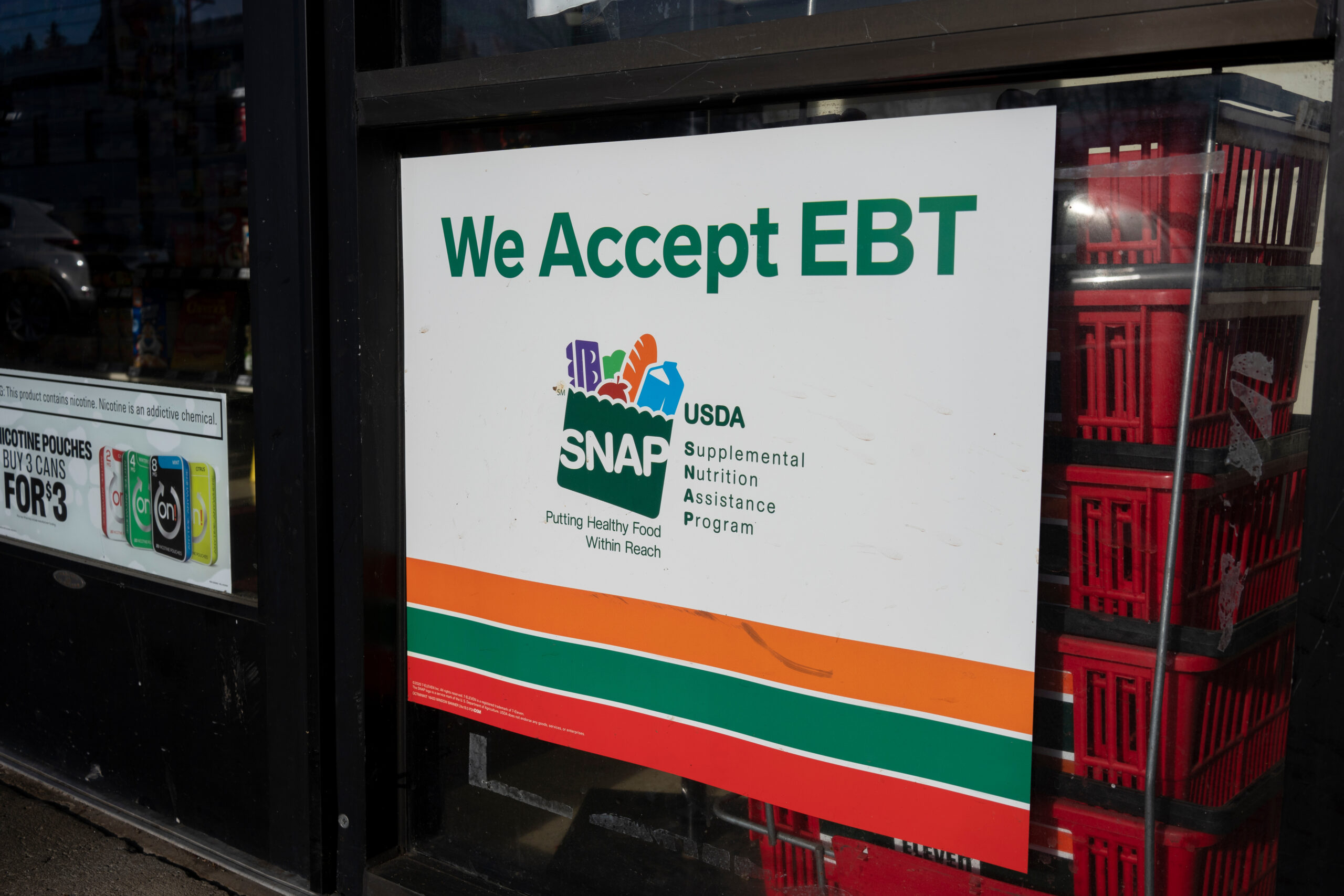
An Evaluation of Cost-Saving Reforms to the Supplemental Nutrition Assistance Program
Abstract Congress is considering ways to reduce spending on the Supplemental Nutrition Assistance Program (SNAP) by $230 billion over 10 years. Reforms will likely include one or more of the following cost-saving…

April 25, 2025
A baby bonus is the wrong response to declining fertility
The Trump Administration is reportedly considering ways to reverse declining fertility in the United States, most notably a $5,000 “baby bonus” for any mother who gives birth. The administration is…
April 9, 2025
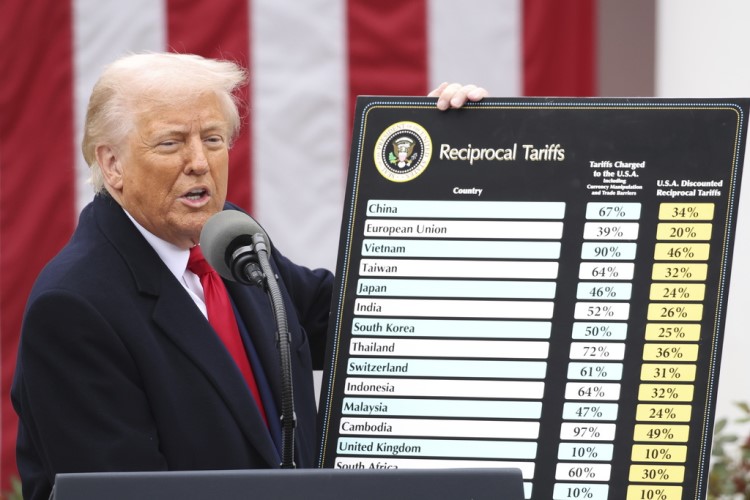
Trump’s Tariff Formula Is Still Wrong. Maybe That’s Why No One Will Admit They Created It.
…President chose to go with a formula related to closing trade deficits, suggested by someone else in the administration.” National Economic Council Director Kevin Hassett, meanwhile, pointed to the US…

April 8, 2025
Discussing President Trump’s tariff formula miscalculation: Corinth on CNN News Central
Kevin Corinth, Deputy Director of the Center on Opportunity and Social Mobility, discusses President Trump’s tariff formula alongside AEI’s Stan Veuger on CNN News Central….
April 7, 2025
Discussing President Trump’s tariff formula: Corinth on ‘Bloomberg Insight’
Kevin Corinth, Deputy Director of the Center on Opportunity and Social Mobility, discusses how President Trump’s formula to calculate tariffs was incorrect on Bloomberg TV’s ‘Bloomberg Insight.’…