Welcome to Our Research Archive
Search and filter by content type, issue area, author, and keyword
- ✕ Clear Filter
- Angela Rachidi (54)
- Beth Akers (1)
- Brent Orrell (4)
- Bruce D. Meyer (11)
- Howard Husock (5)
- James C. Capretta (1)
- James Pethokoukis (3)
- Kevin Corinth (47)
- Kyle Pomerleau (6)
- Leslie Ford (6)
- Matt Weidinger (76)
- Michael R. Strain (3)
- Nicholas Eberstadt (1)
- Paul Ryan (1)
- R. Glenn Hubbard (1)
- Richard Burkhauser (8)
- Richard V. Burkhauser (2)
- Robert Cherry (2)
- Robert Doar (8)
- Ryan Streeter (1)
- Scott Winship (26)
- Stan Veuger (3)
- Timothy P. Carney (2)
- W. Bradford Wilcox (3)
- Yuval Levin (3)

June 17, 2025
Work Requirements For Medicaid Could Increase Income and Reduce Poverty
New Congressional Budget Office figures last week indicate that the reconciliation bill passed by the House and under review in the Senate would reduce annual income among the poorest households by $1,600. The next day, the Urban Institute its own analyses, finding that the bill would throw an additional 1.4 million people into poverty. Much of the…

March 27, 2025
The Looming Debt Crisis, the Trump Tax Cuts, and Medicaid
Let’s start with a chart to understand the dire fiscal situation we are in as a nation. Figure 1. Federal Debt Held by the Public as a Share of Gross Domestic Product, 1940-2054 You’re looking at how sizeable federal debt has been and will be relative to gross domestic product (GDP). From 1960 to 2008, the federal debt held by…

March 24, 2025
Keeping Medicaid Sustainable While Prioritizing the Vulnerable
The unsustainability of future federal budget deficits necessitates reduced entitlement spending. Finding savings from Medicaid will likely be a central part of this year’s budget debate. What are the costs and benefits of various reform proposals affecting children, working-age adults, and the elderly? How can policymakers best prioritize vulnerable populations as they debate ways to…

January 7, 2025
Tax Policy Should Prioritize Shoring Up the Family
During the Biden years, tax policy related to the family revolved around the child tax credit (CTC). Attempts to expand the credit to make it easier for two-parent families to have kids and rely on a sole breadwinner were thwarted by objections that a child allowance would also promote single-parent families in which no one…

October 2, 2024
The effect of taxes and transfers on low-earning workers’ income.
Despite misperceptions that the United States is limping through late-stage capitalism, American workers are more highly compensated than ever before—even the lowest earners. The 20th percentile earner—worse-off than 80 percent of workers—had annual earnings 19 percent higher in 2022 than in 1979, after accounting for inflation and a decline in women choosing to work only…
September 11, 2024
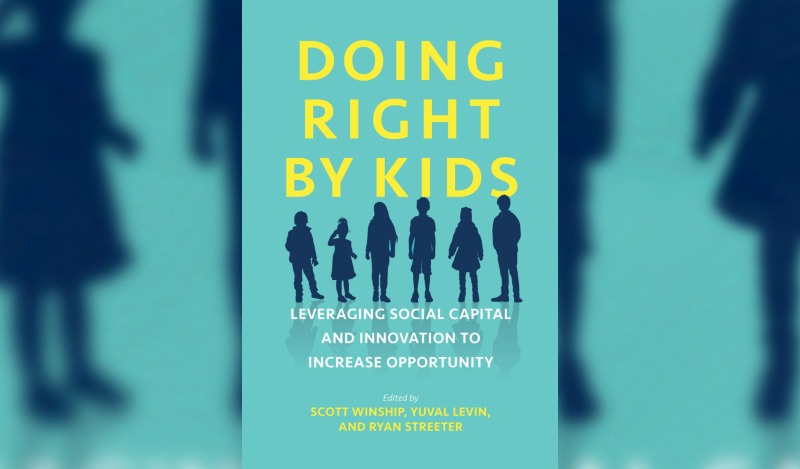
Doing Right by Kids: A Book Event
Event Summary On September 11, AEI’s Scott Winship gathered distinguished experts to launch the new edited volume Doing Right by Kids: Leveraging Social Capital and Innovation to Increase Opportunity, a call to increase opportunity and upward mobility for children from poor families. The first panel focused on the importance of place. Panelists discussed how to contextualize…

June 18, 2024
Economic Opportunity and Social Mobility
Years ago, I worked at the Pew Charitable Trusts on something called the Economic Mobility Project. In 2009, we commissioned a survey covering opportunity, mobility, and the American Dream. One revealing question we asked was the following: The term American Dream means different things to different people. Here are some ways some people have described…

May 20, 2024
Indivar Dutta-Gupta and Scott Winship on the 60th Anniversary of LBJ’s “War on Poverty” on C-SPAN’s “Washington Journal”
Indivar Dutta-Gupta and Scott Winship talked about the 60th anniversary of President Lyndon B. Johnson’s “Great Society” speech and the war on poverty.

May 16, 2024
Critiquing Bastian (2022, 2023, 2024, and forthcoming):On Child Tax Credit Reform and the Sensitivity of Single Mothers to Work Incentives
Abstract In 2021, Congress passed and President Biden signed a major, but temporary, reform to the Child Tax Credit (CTC). Among other reforms to the credit, the American Rescue Plan Act (ARPA) made it available to non-workers on the same basis as workers. Attempts to make this reform permanent foundered, in part, due to opposition…

March 28, 2024
An Early Look at the Child Tax Credit Changes in the Tax Relief for American Families and Workers Act of 2024
Abstract The Tax Relief for American Families and Workers Act of 2024, which the US House of Representatives passed on January 31, 2024, and the Senate is now considering, would make important changes to the child tax credit (CTC) if enacted. The legislation would increase CTC payments for families with lower earnings, apply a one-year…