
January 21, 2025
President Trump’s USDA Should Fix Food Stamp Work Requirement Waivers
As President Donald Trump begins his second term, he and his administration will be exploring ways to improve government efficiency and economic outcomes for low-income Americans. One such policy—a 2019 regulation governing states’ use of waivers to the Supplemental Nutrition Assistance Program’s (SNAP) work requirement—does just that. Although the regulation was never implemented after being…
December 30, 2024
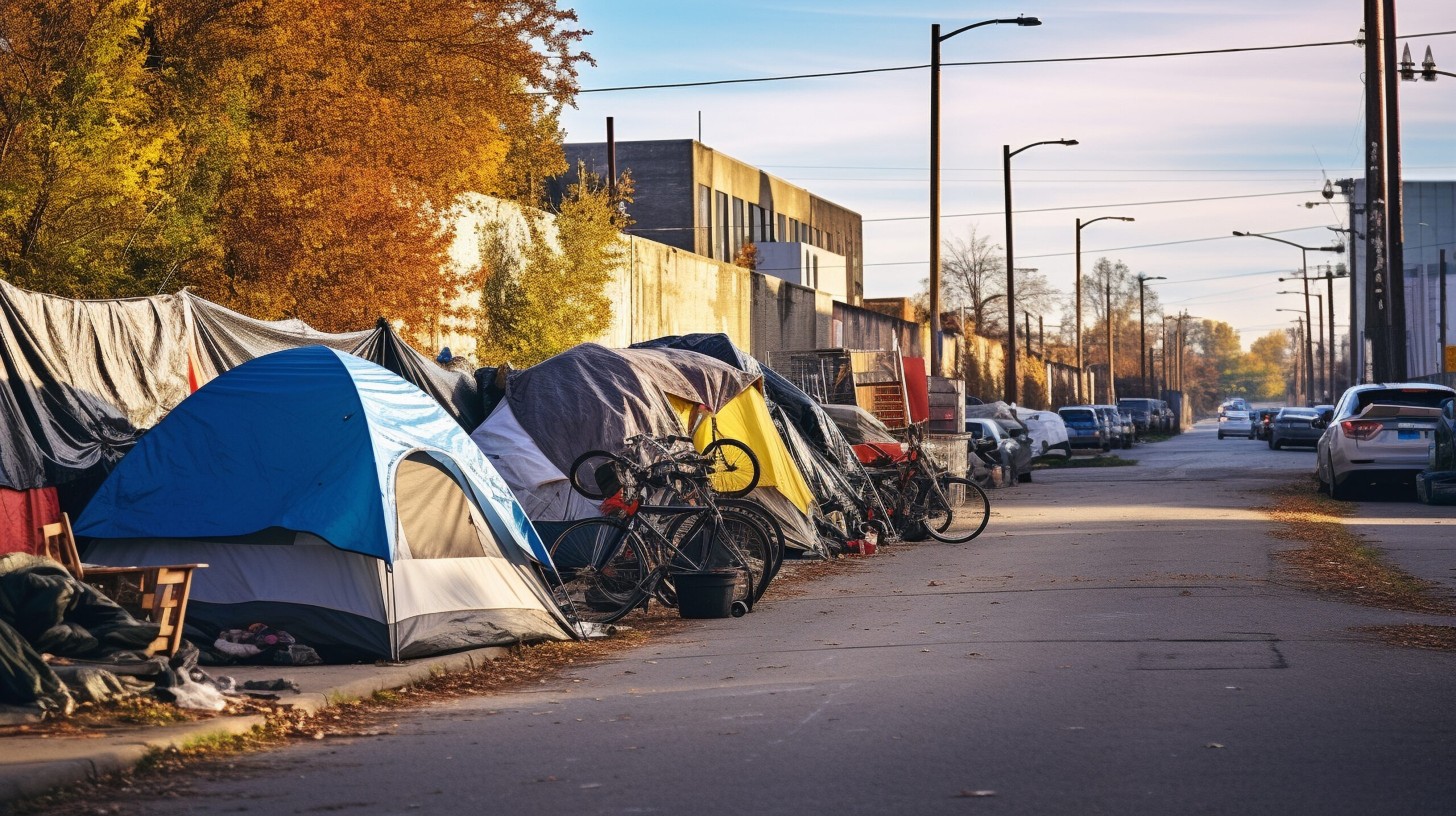
What’s behind the unprecedented rise in homelessness, and how can we reverse it?
The annual United States homeless population estimates for 2024 were released last week. Homelessness grew by a record 18% annually in 2024, following a then record 12% increase in 2023. As shown in the figure below, the recent spike in homelessness is unprecedented. Going back 17 years since national homeless counts began, homelessness never before…

October 30, 2024
A SNAP Reform Framework Focused on the Future
No matter the outcome of next week’s election, we can be certain that the new President and Congress will confront urgent policy and legislative challenges. One priority issue for the new Congress will be renewing the Farm Bill. True to its name, the Farm Bill authorizes a wide range of programs to support farmers and…

September 27, 2024
Food Insecurity Increases Driven by Middle- and High-Income Households
Last month, the US Department of Agriculture (USDA) released their annual report detailing the prevalence of food insecurity in the United States. The report found that 13.5 percent of all US households are food insecure, or, in plain language, have “limited or uncertain access to adequate food”—a significant increase from the year prior. Just a…

September 24, 2024
Household Food Insecurity Rises Again – Inflation, especially for households ineligible for safety net programs, to blame
Each year the USDA issues a closely-followed report on the extent of food insecurity in the United States. This year, the USDA reported 13.5 percent of US households were food insecure at some point in 2023, which was a statistically significant increase from the 2022 rate of 12.8 percent and higher than the pre-pandemic rate…

September 19, 2024
Government benefit programs already do a lot to help low income families
Politicians, policy analysts, and advocates have proposed increasing the generosity of the Child Tax Credit (CTC), as a means of providing more resources to low-income families with children. Before deciding whether to expand the CTC and by how much, policymakers should be aware of existing tax and transfer policies that already provide a substantial amount…

August 28, 2024
Some Context Behind JD Vance’s Child Tax Credit Comments
Recently, GOP Vice Presidential nominee JD Vance said on Face the Nation “We should expand the child tax credit… I’d love to see a child tax credit that’s $5,000 per child.” He further proposed that the expanded credit be extended to “all American families,” emphasizing disparities in the availability of the current child tax credit…

July 26, 2024
Two Cheers for Shrinking Black-White Opportunity Gaps
The latest in a series of important reports on social mobility by the research group Opportunity Insights is out, and it’s another conversation-changer. Across a variety of outcomes in adulthood and adolescence, the gap between black Americans who grew up with low-income parents and their white counterparts has narrowed over time. This news is certainly…

July 11, 2024
Exploring Trends in Food Bank Use
Business Insider wrote in early 2023 that food banks are “bracing themselves for an onslaught” of increased demand. Later that year, Bloomberg reported that “lines stretch down the block at food banks.” And two months ago, CNN noted that the “share of people turning to hunger relief programs remains higher than it was prior to…

July 10, 2024
Has Income Growth between Generations of Americans Stalled?
A defining aspect of the American dream is that the economic well-being of each generation surpasses that of the previous one. However, commentators have questioned whether this holds true for the most recent generations. A 2022 Gallup poll found that only 42 percent of Americans expect today’s young people to have a better life than…